Drive Car
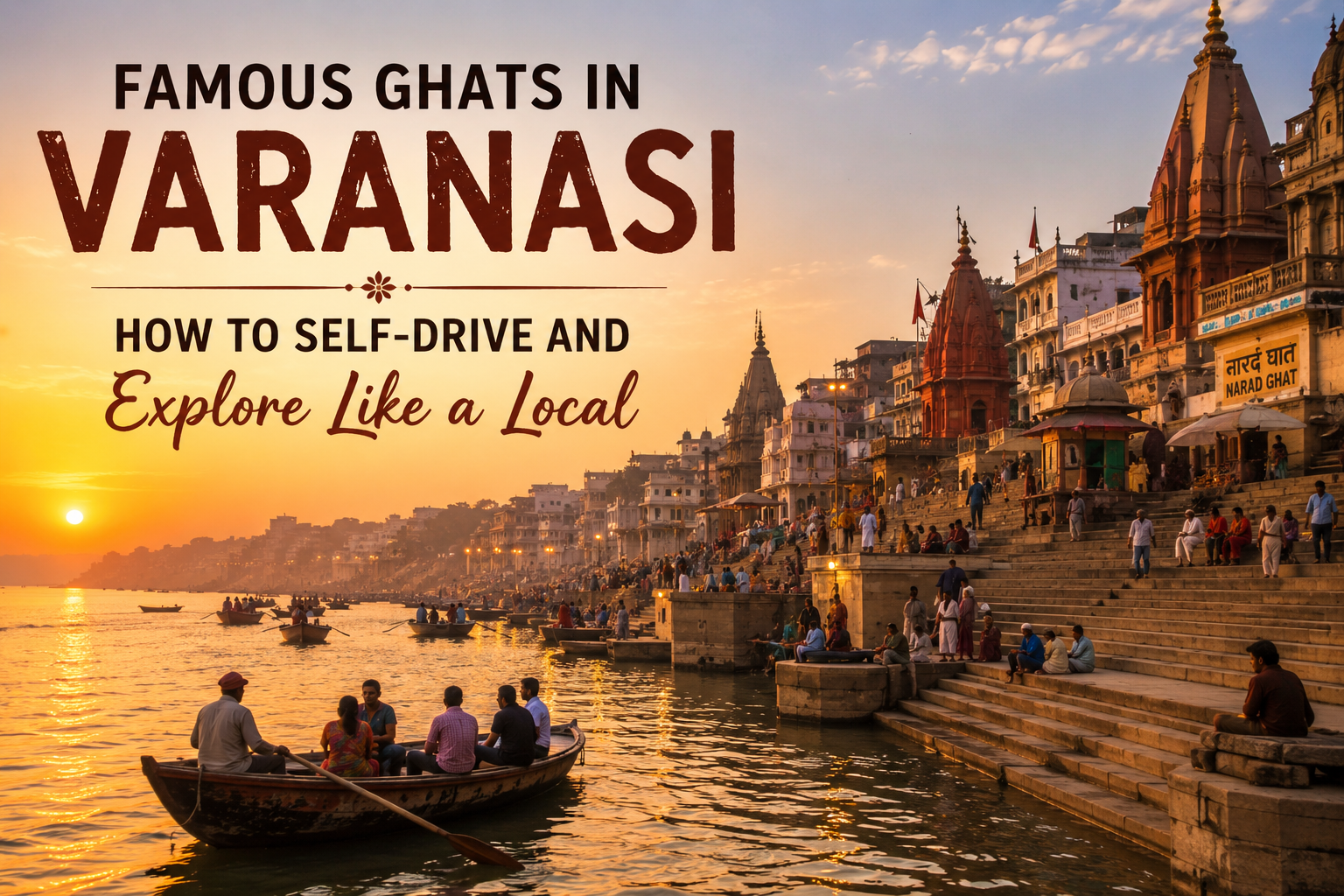
Famous Ghats in Varanasi: How to Self-Drive and Explore Like a Local
 May 9, 2026
 6 Min Read
Drive Car
Famous Ghats in Varanasi: How to Self-Drive and Explore Like a Local
 4 Min Read
There are cities you visit for sightseeing.
And then there’s Varanasi — a city you feel before you even understand it.
The moment you enter the narrow lanes, hear temple bells at 6 AM, spot chai stalls already crowded, and watch the Ganga flowing beside centuries-old steps, you realize this place moves differently from the rest of India.
And honestly? That’s exactly why people keep coming back.
Most tourists rush through the city trying to “cover” all the famous spots in one day. Big mistake. Varanasi isn’t meant to be speedrun like a travel checklist.
If you really want to experience the famous ghat in Varanasi culture properly, the best thing you can do is slow down, self-drive around the city, get lost in the lanes a little, and explore the ghats like a local.
Because the real magic of Varanasi ghats isn’t just in the postcard views — it’s in the tiny moments in between.
Why Varanasi Ghats Feel So Different
Every city has landmarks.
Varanasi has emotions attached to places.
The ghats here aren’t just tourist attractions. They’re where life happens in real time — prayers, conversations, music, rituals, morning chai, meditation, festivals, funerals, chaos, peace… sometimes all at once.
That’s what makes the Varanasi ghats unforgettable.
One minute you’ll see people performing Ganga Aarti. The next minute, someone’s casually feeding dogs while a sadhu argues about cricket nearby.
The city is deeply spiritual, but also weirdly alive and normal at the same time.
And that contrast is exactly what makes it beautiful.
Why Exploring Varanasi by Self-Drive Is Actually Better
Now obviously, driving inside the old city lanes can feel like a side quest designed to test your patience.
But having your own car changes the experience completely.
You’re not dependent on overpriced auto rides, rushed tour schedules, or waiting around for transport every few hours.
A self-drive trip gives you freedom to:
- explore ghats early morning
- stop at random chai spots
- visit lesser-known areas
- drive along the riverfront roads
- take spontaneous food breaks
- avoid touristy rush hours
And honestly, Varanasi is one of those places where spontaneous exploring works better than strict itineraries.
Some of the best moments happen when you randomly stop somewhere because the vibe looked interesting.
Best Ghats to Visit in Varanasi
If you’re wondering which ghat is famous in Varanasi, the answer is honestly: several of them.
Every ghat has its own personality.
Some are peaceful. Some are chaotic. Some feel spiritual. Some feel cinematic. Some are just perfect for sitting quietly and people-watching for hours.
Here are the best ghats to visit in Varanasi if you want the full experience.
1. Dashashwamedh Ghat – The Heart of the City
If someone asks “which ghat is famous in Varanasi,” this is probably the answer they’re expecting.
Dashashwamedh Ghat is the most iconic and busiest among all Varanasi ghats.
This is where the famous Ganga Aarti takes place every evening — and yes, it’s genuinely worth watching at least once.
The atmosphere feels electric:
- temple bells
- fire lamps
- chanting
- river breeze
- crowds silently watching the ceremony
It’s chaotic, loud, spiritual, overwhelming, and beautiful all at once.
Pro tip: Go early if you want decent seating during Aarti. Otherwise, you’ll spend half your time trying to see over someone recording the entire ceremony on an iPad for no reason.
2. Assi Ghat – Chill, Young, and Peaceful
Assi Ghat feels different from the rest.
It’s calmer, younger, and honestly more relaxed.
You’ll find:
- students
- travellers
- musicians
- yoga groups
- cafés
- people journaling like they’re in a coming-of-age film
Morning time here is elite.
Sunrise at Assi Ghat with chai in hand just hits differently.
It’s easily one of the best ghats to visit in Varanasi if you want to slow down and actually absorb the city instead of rushing through it.
Also, the café culture around Assi Ghat is surprisingly good.
3. Manikarnika Ghat – Intense but Important
This is one of the oldest and most significant Varanasi ghats.
Manikarnika Ghat is primarily known for cremation rituals and holds deep spiritual importance in Hindu beliefs.
Now listen — this place is not “tourist entertainment.”
People sometimes treat it like a spectacle and that’s honestly disrespectful.
If you visit, be mindful and respectful. No unnecessary photos. No loud conversations.
The experience can feel intense emotionally, but it also gives you a deeper understanding of how Varanasi sees life and death differently from most places.
4. Chet Singh Ghat – Underrated and Photogenic
Most tourists skip this ghat completely.
Which is exactly why it’s peaceful.
The fort architecture here looks beautiful, especially during golden hour. If you want quieter views away from the main tourist rush, this is one of the best ghats to visit in Varanasi.
Perfect for:
- photography
- quiet walks
- sitting by the river
- escaping crowds temporarily
And honestly, sometimes silence feels rare in Varanasi — which makes spots like this even better.
5. Harishchandra Ghat – Spiritual and Authentic
Harishchandra Ghat is another important cremation ghat among the famous ghats in Varanasi.
Compared to Dashashwamedh Ghat, this area feels less commercial and more grounded.
The atmosphere here reminds you that Varanasi isn’t trying to impress tourists. The city simply exists as it has for centuries.
And that authenticity is exactly why people connect emotionally with this place.
6. Rajendra Prasad Ghat – Perfect for Evening Views
Located close to Dashashwamedh Ghat, this area becomes incredibly beautiful during evenings.
The riverfront lights, boats, reflections on water, and evening atmosphere make it one of the prettiest Varanasi ghats for relaxing after sunset.
If you’re someone who enjoys simply sitting and observing people around you, this place is perfect.
7. Kedar Ghat – Colorful and Less Crowded
Kedar Ghat stands out visually because of its vibrant temple colors and architecture.
It feels slightly calmer compared to the main tourist-heavy ghats, which makes exploring more enjoyable.
The South Indian temple influence here gives the place a unique vibe compared to other Varanasi ghats.
Also, the steps here look amazing during early morning light.
How to Explore Varanasi Like a Local
Tourists usually try to “finish” Varanasi in one day.
Locals know that’s impossible.
The best way to experience the city is to let it happen naturally.
Here’s how to actually enjoy it.
Start Your Day Early
Varanasi mornings are magical.
The city wakes up slowly with temple chants, boat rides, chai stalls, and soft sunlight hitting the ghats.
And honestly, sunrise feels more peaceful than evenings here.
The earlier you start, the better the experience.
Walk More Than You Plan
Google Maps becomes emotional support in Varanasi lanes.
Half the roads look confusing, some suddenly become too narrow, and occasionally cows will fully block your path like they own the city.
But walking is still the best way to discover hidden cafés, old temples, local shops, and random beautiful moments.
Try Street Food — Carefully
You cannot visit Varanasi and eat only café sandwiches.
That’s criminal behavior.
Try:
- kachori sabzi
- tamatar chaat
- malaiyyo (during winters)
- lassi
- baati chokha
- rabri jalebi
But yes, eat from busy and trusted places unless you want your stomach to start a protest during the trip.
Take a Boat Ride
A boat ride across Varanasi ghats during sunrise or sunset is genuinely worth it.
From the river, the city looks completely different.
You’ll see the ghats stretching endlessly along the water while temples, prayers, smoke, and sounds blend together into one surreal experience.
It’s chaotic and peaceful at the same time somehow.
Very Varanasi behavior.
Don’t Overplan Everything
Some cities reward strict itineraries.
Varanasi rewards curiosity.
Leave room for random exploring. Some of your best memories will probably come from unplanned moments:
- finding a hidden chai shop
- hearing live classical music somewhere
- discovering a quiet ghat accidentally
- talking to locals
- sitting beside the river doing absolutely nothing
Best Time to Visit Varanasi Ghats
The best months to explore the famous ghats in Varanasi are:
- October to March
The weather stays cooler and walking becomes much easier.
Monsoon season makes the river dramatic and beautiful too, but rising water levels can affect access to certain ghats.
Summer afternoons, meanwhile, are basically survival mode.
Final Thoughts
Varanasi isn’t polished.
It’s crowded, noisy, emotional, confusing, ancient, beautiful, spiritual, exhausting, and unforgettable — sometimes all within the same hour.
And that’s exactly why people fall in love with it.
The famous ghat in Varanasi experience isn’t about checking off landmarks. It’s about slowing down enough to notice the details — the sound of temple bells, morning prayers by the river, old men discussing politics over chai, boats floating through mist, and evenings that somehow feel timeless.
So if you’re planning to explore Varanasi ghats, don’t rush it.
Drive slowly.
Walk aimlessly.
Wake up early.
Watch the river longer than necessary.
Because Varanasi is one of those rare places that stays with you long after the trip ends.
Articles You Must Read

Top Cities
Other Cities
CAR RENTAL AT AIRPORTS IN INDIA
©2026 Zoomcar